



The island of Santorini is a spectacular island that stands out for its raw beauty. One of the most scenic islands on the Aegean, it is one of the great natural wonders of the world.
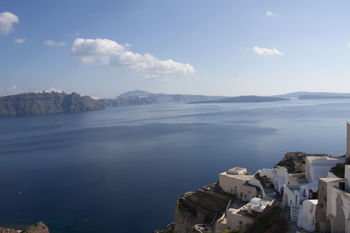
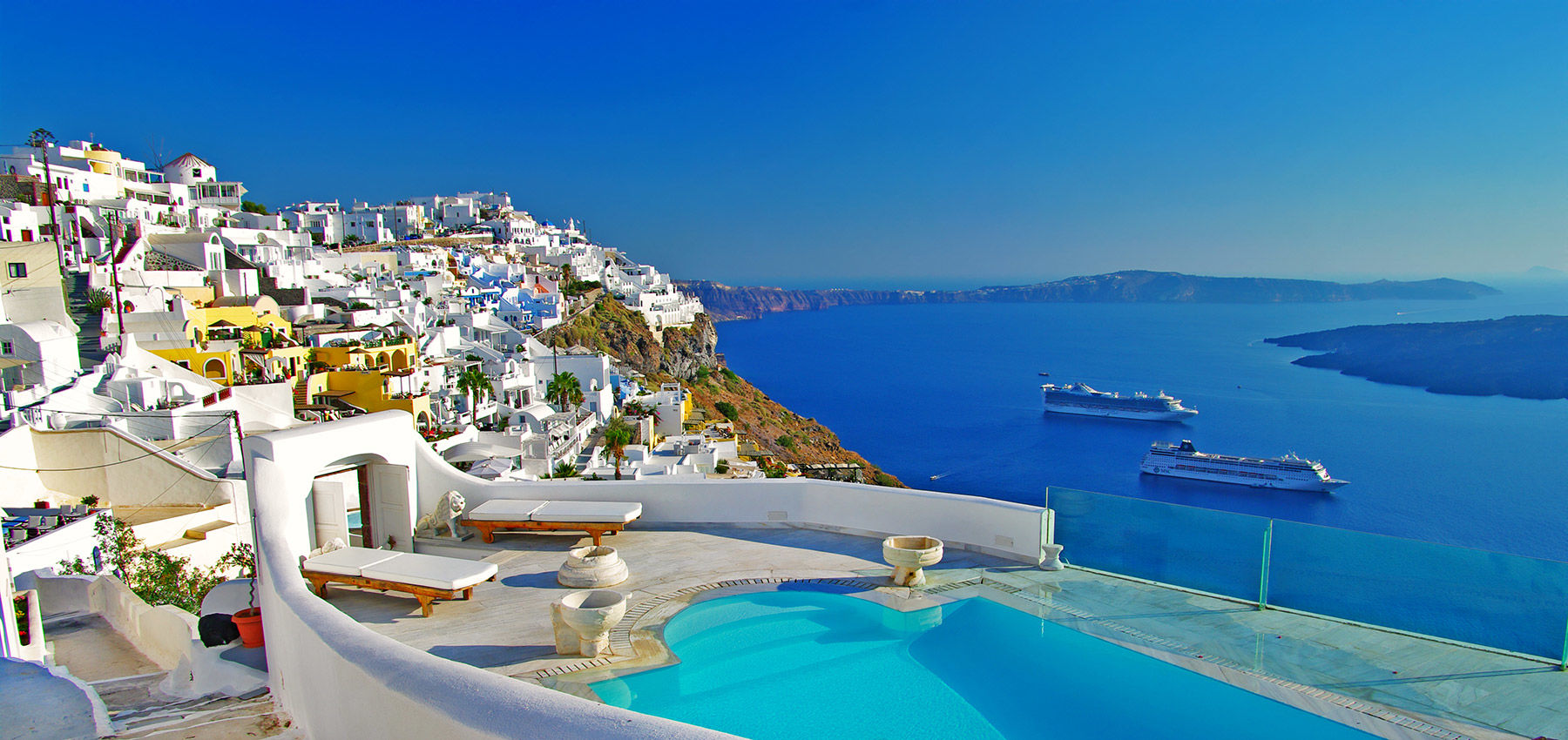
Part of the island’s attraction is the landscape and seascape of Thera, wrapped around the flooded caldera with numerous villages perched on the cliffs, hundreds of meters above the water. The present configuration is the result of a large volcanic eruption, an event speculated to have been the inspiration for the Myth of Atlantis.
A description of Atlantis as written by Plato shows a striking resemblance to Santorini. In his account Plato describes quarries on the island of Atlantis were “rocks of white, black and red were extracted from the hills and used to construct a great island city”. This description matches the composition of rocks found in Santorini. Also, one of the frescos discovered at the archeological site of Akrotiri, painted before the eruption in this ancient dwelling, resembles Plato’s description of the mythical Atlantis. All these, bring about the theory that Santorini may have been one of the possible locations of the fabled island.
The caldera is the physical incarnation of the island’s history. Herodotus says that the island was originally called Stongyle (‘the round one’), because it was once a complete island. A large mountainous, roughly circular land mass, with a typical central volcanic peak. The sharp and beautiful scene of circumventing steep cliffs, we see today is the remnant of what was probably the largest volcanic explosion in human history. When, thousands of years ago, during the final throws of a major eruption, the implosion of the magma chamber resulted in the sea flooding the massively enlarged caldera, forming one of the largest crater lakes on earth.
Later the island was referred to as Kalliste (‘the most beautiful one’). Renowned for the beautiful views of whitewashed villages perched on the cliff tops like snowflakes, and famous for its magnificent sunsets of red and purple hues. During the day, however it marvels with a unique palette of deep Aegean blue and translucent white nuances of Greek sunlight.
In his book “the Histories”, Herodotus refers to the island as Thera, and that is the official name by which it is called today. Even though, it is mostly referred to as Santorini, by locals and foreigners alike. The name of Santorini, is a derivative of Santa Irene and originated in the 13th century AD, a legacy of the Venetians.
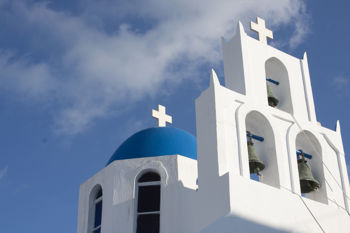
Throughout the ages the magnificence of Santorini has been a source of inspiration for artists. As can be seen in the magnificent frescos of Akrotiri as well as the recent works by many great painters and writers. Amid the unmistakable Aegean blue, the picturesque blue domed churches and white houses, perched on the clifftops and bathed in the incredible Aegean light have provided a source of inspiration for many artists.
Painters and photographers have tried to capture the magic that shines in the fantastic light that reflects off the majestic landscape, recreating their own views of this unique place, immortalizing it’s beauty in their work. Robert McCabe, Fred Boissonsas, Herbet List, Constantinos Maleas, Yiannis Gaitis and Nikos Hadjikyriakos-Ghikas are just a few of those who have found inspiration for their work on the island of Santorini.
We are certain that you too, will be inspired by this scared island.